
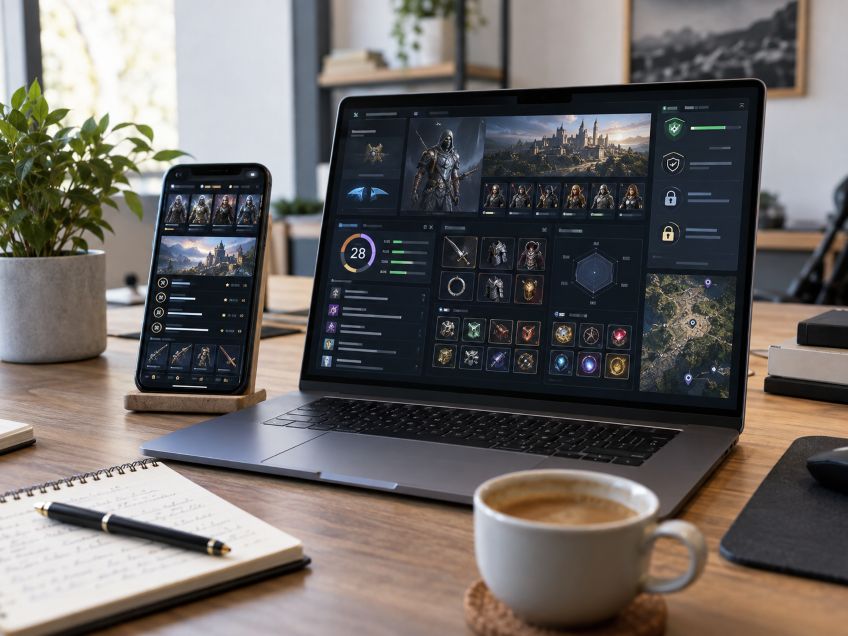
Game-account listings can look precise while still leaving out details that determine how much progress you are actually getting. A high headline level is easy to spot, but hero development, equipment, defenses, and upgrade depth can change the practical value of an account. A useful buying checklist starts with measurable progression, not the listing title or asking price.
That same reading discipline applies when you order a Clash Royale account or shop in another progression-based game. Clash of Clans is a useful case study because current marketplace listings expose several measurable fields, while Supercell publishes clear information about progression systems and account-security rules.
Before comparing listings, understand one important rule. Supercell says buying, selling, sharing, or giving away game accounts violates its Terms of Service. Its support guidance also warns that sellers may retain access, sell an account more than once, or leave buyers with accounts that cannot receive normal support. That risk belongs in the buying decision from the start.
A Step-by-Step Guide to Checking a Game Account Before You Buy
Step 1: Start With the Main Progression Tier
For Clash of Clans, begin with the Town Hall. Supercell introduced Town Hall 18 in November 2025, making it the current top Town Hall tier. Marketplace listings may therefore describe accounts as TH18, TH17, or another tier.
Do not stop there. A Town Hall number shows the progression tier, not how completely the village has been upgraded. Current igitems listings separate accounts into categories such as fully maxed, nearly maxed, standard, and rushed. Two accounts at the same Town Hall can therefore represent very different amounts of completed progress.
Step 2: Read Hero Levels Separately
Next, check hero progression. Current igitems marketplace cards display individual hero levels, including the Barbarian King, Archer Queen, Minion Prince, Grand Warden, Royal Champion, and Dragon Duke. Some listings also show a Hero Journey figure.
Supercell‘s June 2026 Anime Fury update describes Hero Journey as a reward track based on cumulative Hero Levels, with each hero level contributing to overall progress. A high Town Hall paired with much weaker heroes should therefore be judged differently from a balanced account where both systems have advanced together.
Step 3: Check What “Maxed” Actually Means
Words such as “maxed,” “near max,” and “almost max” need context. Ask what is complete. Does the description refer to heroes, walls, defenses, troops, equipment, or only selected parts of the village?
Current igitems pricing guidance lists walls and defense completion among the factors that influence asking prices. Live listings also highlight combinations such as max walls, max heroes, or selected max equipment. A broad label should never replace a line-by-line check of upgrade status.
Step 4: Review Hero Equipment
Hero Equipment deserves its own check because it changes hero abilities. Supercell says the Blacksmith becomes available at Town Hall 8 and lets players equip and upgrade Hero Equipment. Each hero can use two pieces, while upgrades require Shiny, Glowy and, at higher Epic levels, Starry Ore.
Check which pieces are unlocked, which are Epic, and what levels they have reached. Current igitems listings often mention Epic equipment counts or specific high-level items. This shows why equipment progress should be examined separately rather than treated as a minor extra.
Step 5: Compare Supporting Progress
Then examine supporting details. Current Clash of Clans listings on igitems may show gems, Builder Base machines, skins, scenery, rare obstacles, builder count, and name-change availability. The marketplace also identifies several of these details as factors that can influence asking prices.
Their importance depends on your goal. A collector may place more value on rare cosmetics, while someone focused on gameplay may pay closer attention to heroes, defenses, equipment, and upgrade completion. Decide which features matter before paying more for extras you may rarely use.
Step 6: Check Access and Recovery Risk
A strong account can still be a poor purchase if control is uncertain. Supercell‘s Account Protection system uses SMS verification and recovery codes to help establish ownership. The company also tells users never to share verification or recovery codes except with support during a request they initiated.
This creates a key question for any third-party purchase: could the seller recover access later? Supercell explicitly warns that bought accounts may never be secure and that previous owners may continue accessing them. Seller ratings, payment holds, or marketplace disputes may reduce transaction risk, but they do not override the publisher’s rules or guarantee permanent control.
What Should You Check Before Any Account Order?
The Clash of Clans example produces a broader checklist that can be applied to many progression-based games:
- Main account or level tier
- Hero, character, or card progression
- Upgrade-completion status
- Equipment, gear, or unlock counts
- Premium currency and stored items
- Cosmetics or collectibles
- Seller history and listing accuracy
- Transfer, recovery, and game-policy risks
Clear presentation also matters because buyers need to understand an offer quickly. The same principles of trust, audience fit, and communicating value appear in broader video game marketing strategies. For an account marketplace, that means useful listings should make important progression details easy to compare instead of relying on vague claims or attention-grabbing labels.
The goal is to compare what is actually inside the account with the price being asked. A polished title is not enough. Read the measurable fields, check what “maxed” means, compare similar listings, and understand the publisher’s rules before paying. The clearer the progression data is, the easier it becomes to judge whether an offer is accurately described or simply well marketed.