
 Most websites have one common problem: content that goes stale. What was accurate last year, or even last month, can quickly become outdated. Prices change, regulations shift, technologies evolve, and new competitors emerge. For years, fixing this meant a slow, manual process of reviewing, rewriting, and republishing pages.
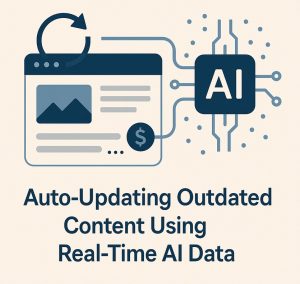
But that’s changing fast. Thanks to advances in artificial intelligence and automation, websites can now stay up to date automatically. Real-time AI systems can scan, detect, and update outdated information autonomously without constant human oversight. This technology doesn’t just save time — it keeps online content accurate, relevant, and trustworthy at scale.
Let’s look at how it works, why it matters, and what it means for businesses that rely on keeping their digital presence fresh.
The Cost of Outdated Information
Outdated content doesn’t just look sloppy; it can also be harmful. It can damage credibility and performance. A product description with an expired discount, a blog post citing old statistics, or a travel guide missing new safety rules can all lead to lost trust and missed conversions.
Search engines like Google also notice. Their algorithms prioritize fresh, authoritative content. When a page goes untouched for too long, rankings can drop, visibility declines, and traffic suffers. That’s why keeping content up to date has become a core part of SEO and brand management.
Traditionally, the fix has been labor-intensive. Content teams set review schedules, track pages in spreadsheets, and manually check for updates. It’s effective, but not efficient.
How AI Detects Outdated Content
AI systems can now analyze content at scale using natural language processing (NLP) and data monitoring tools. They don’t just read text. They understand what it’s about, what data it references, and whether that data is still valid.
Here’s how it works in practice:
- Data monitoring: The AI connects to trusted, real-time data sources such as financial feeds, weather APIs, or public databases.
- Content scanning: It regularly reviews website text, identifying time-sensitive elements such as numbers, dates, names, and trends.
- Change detection: When it spots a mismatch, such as an outdated statistic or regulation, it flags the section or drafts an updated version.
- Automated rewriting: Depending on permissions, the AI can either recommend edits or apply them automatically, updating the content in real time.
For example, a blog post about housing prices could stay current by pulling live data from real estate APIs. A tech comparison article could refresh product specs as manufacturers release updates. Even health or finance sites could automatically adjust figures based on new reports or official releases.
The result is living content that stays accurate and relevant.
The Power of Real-Time Data
The real magic happens when AI isn’t just reacting but predicting. With real-time data streams, the system doesn’t wait for something to become outdated. It anticipates when updates are needed.
Let’s say a business runs an e-commerce site with fluctuating inventory. Instead of manually removing out-of-stock items, an AI integration could automatically mark them unavailable and replace them with similar alternatives. When new stock arrives, it updates listings instantly.
Or consider a news organization covering breaking events. AI tools can monitor live data sources, such as social feeds or verified databases, and inject fresh facts into ongoing stories without human delay. This means audiences always get the most current version, something that was nearly impossible before.
That responsiveness builds trust. Readers, customers, and partners start to see the brand as a reliable source because it genuinely is.
Benefits Beyond Accuracy
The advantages of AI-driven content updating go far beyond saving time. Here are some of the biggest:
- Consistency: Updates are applied uniformly across all content, avoiding human error or oversight.
- Scalability: Even large websites can stay current without expanding their content teams.
- SEO gains: Fresh, accurate content signals authority to search engines, boosting rankings and click-through rates.
- Cost savings: Automating updates reduces the need for manual checks, freeing teams to focus on strategy and creativity.
Essentially, AI turns content maintenance from a reactive chore into a proactive system.
Keeping the Human Touch
Still, automation doesn’t replace human judgment. It enhances it. AI can handle factual updates, data accuracy, and consistency, but humans bring nuance, tone, and context. A brand voice can’t be automated. It has to be managed.
The ideal setup is a partnership. The AI handles real-time scanning and minor revisions, while human editors focus on storytelling, audience engagement, and long-term strategy. In this way, teams can maintain authenticity while benefiting from the efficiency of machine learning.
Most systems also allow for approval workflows. AI suggestions can be reviewed before publication, ensuring sensitive updates go through proper checks. This balance of automation and oversight keeps quality high and risk low.
Looking Ahead: A Future of Living Content
The concept of static web content is fading fast. In its place is something dynamic, constantly learning, evolving, and aligning with the latest data.
In the near future, AI could even personalize updates for each user. Imagine a travel article that adjusts hotel prices based on your location, or a financial guide that updates examples with your local currency and tax laws. The duplicate core content could stay accurate and relevant to everyone, all the time.
For businesses, this means less manual work and more time spent on creative growth. For readers, it means a web that feels alive, where information adapts as fast as the world changes.
The Bottom Line
Auto-updating content with real-time AI data isn’t just a trend. It’s becoming a necessity. The pace of change online is too fast for manual updates alone. With AI tools, brands can stay ahead, ensuring their information remains accurate, trustworthy, and competitive.
It’s not about replacing people. It’s about giving them better tools. When AI handles the repetitive work of keeping content current, humans can focus on the parts that genuinely connect with audiences: ideas, empathy, and creativity.
The result is a smarter, faster, and more reliable digital presence that evolves in step with the world it serves.